
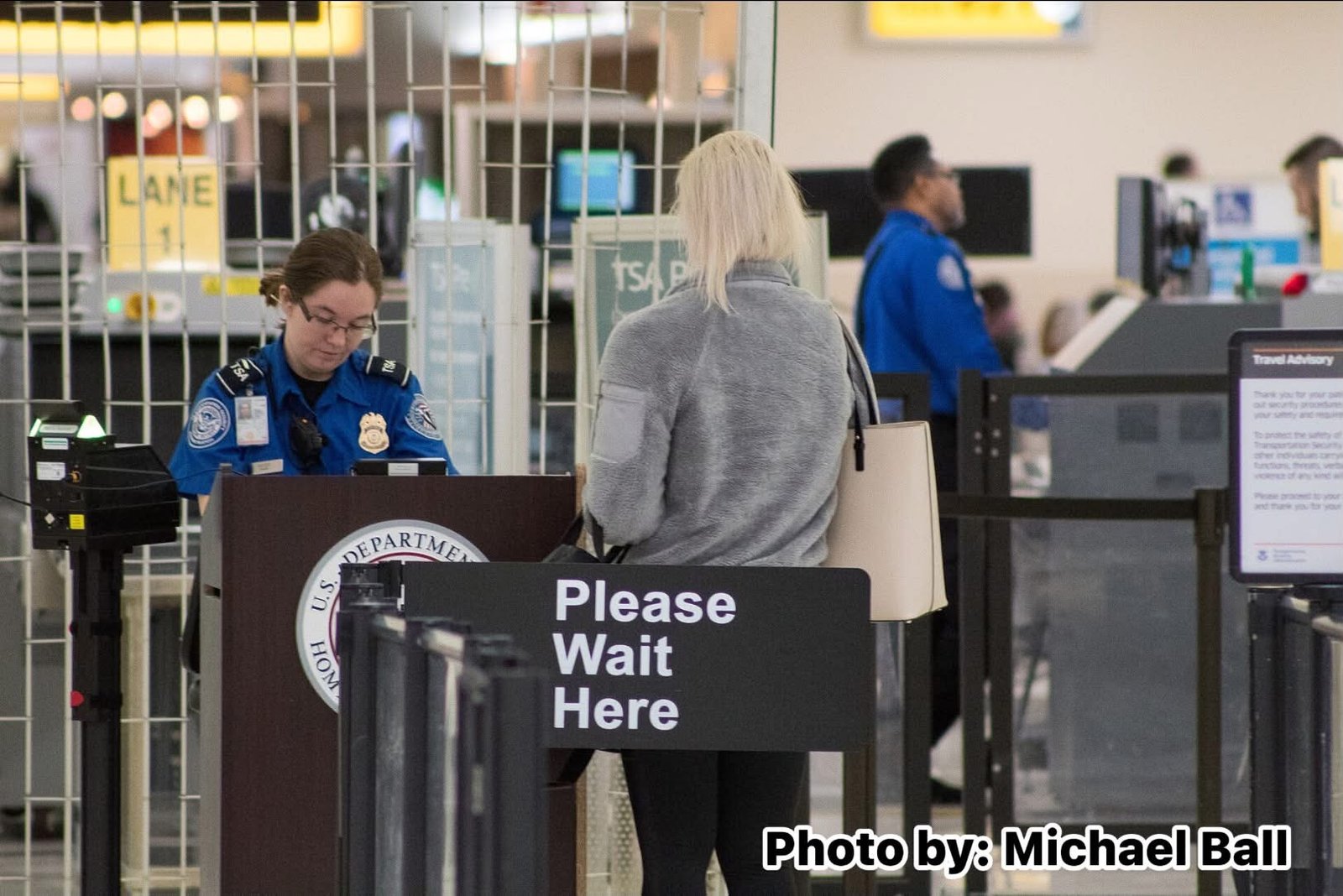
WASHINGTON — The Transportation Security Administration confirmed Tuesday it is removing chairs from the stations where officers check boarding passes and IDs, requiring the officers to work standing.
The officers work at the entrance to security checkpoints, where they examine passengers’ boarding passes and identification. TSA is removing all chairs from those positions nationwide, and AFGE TSA Council 100 said the removals have already begun at most commercial airports.
According to the agency requiring officers to remain on their feet is intended to improve the checkpoint experience while maintaining security. It pressed further that the change supports alertness, security posture and hospitality, and that officers must meet fitness-for-duty requirements to perform their national security function while creating a welcoming and professional environment.
“This welcome change reinforces both our security posture and our commitment to hospitality by having these officers on their feet and alert,” TSA said.
The American Federation of Government Employees TSA Council 100 said it learned of the decision from its members. There was no formal notification to AFGE or any of its local chapters, according to one union leader. The council described the decision as a disregard for workers’ rights and safety.
In the Union’s argues the seats matter because of the physical conditions of the assignment. Officers stand and walk on hard surfaces throughout their shifts, and the council said the chairs provided basic support.
“These chairs serve as basic ergonomic and safety support for officers who stand and walk on hard surfaces all day,” the council said in its statement, as reported by CNN.
The council said TSA was treating the seating as a privilege, while it regarded the chairs as basic safety and common decency for the workforce.
The change comes under new Administrator David P. Cummins, who was sworn in Aug. 7 to lead an agency of about 60,000 employees and security operations at more than 430 airports. Cummins’ priorities include improving workforce morale, deploying new checkpoint technology, reducing wait times and helping travelers move through security faster.
In August, Cummins announced Horizon 25, a strategy ahead of the agency’s 25th anniversary in November. TSA said the plan aims to modernize checkpoints, elevate the traveler experience and harden transportation security, including streamlining new technology and expanding public-private partnerships to modernize checkpoints. TSA’s Horizon 25 announcement does not mention the chair-removal policy.
The positions are now being operated without the seats the union says provided ergonomic and safety support, while TSA says having officers on their feet supports alertness, security and the passenger experience.
NOTE: The development was first reported by CNN.