
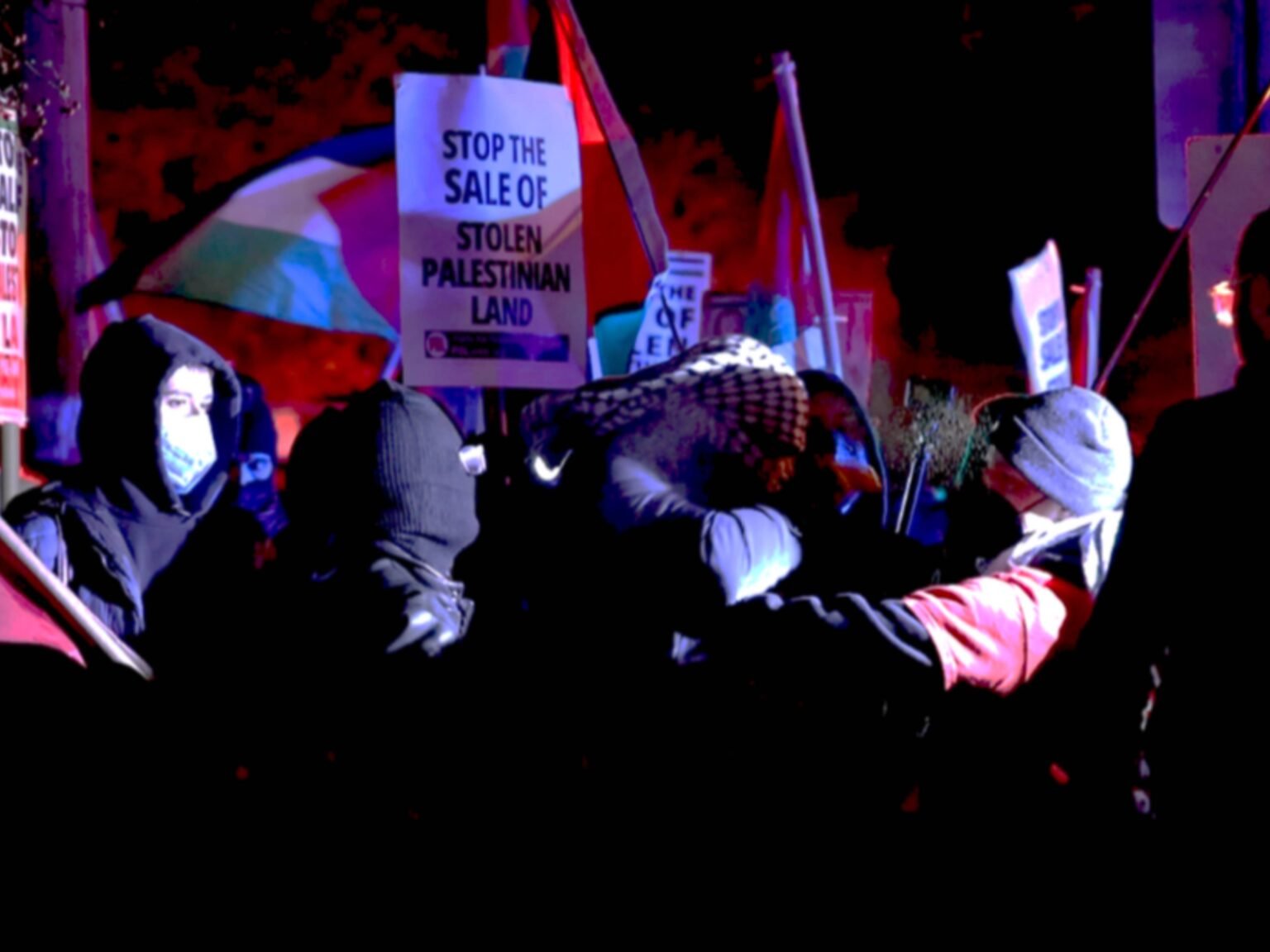
A US Federal Judge has now dismissed the Justice Department’s lawsuit that used a law associated with abortion-clinic access to sue protesters at a West Orange, New Jersey, synagogue. U.S. District Judge Katharine S. Hayden ruled that the complaint, as written, does not plausibly allege violations of the Freedom of Access to Clinic Entrances Act.
Hayden dismissed the sole FACE Act claim against four people and two New Jersey organizations without prejudice.
The Justice Department filed the suit in September 2025 under a provision of the FACE Act that bars force, threats of force, or physical obstruction aimed at intentionally injuring, intimidating, or interfering with people exercising religion at a place of worship.
The law was passed by Congress back in 1994 and its protections extend to both clinic access and religious exercise. The government applied that worship provision to a Nov. 13, 2024, protest at Congregation Ohr Torah.
For purposes of the motions to dismiss, Hayden treated the complaint’s factual allegations as true. Even accepting them, she concluded the pleading did not tie each defendant’s own alleged conduct to the specific conduct the statute prohibits.
The ruling turned less on whether the protest was disruptive than on whether the complaint plausibly connected particular defendants to force, threats, or physical obstruction intended to interfere with worship.
“The FACE Act does not impose liability for disruptive, offensive, or hostile advocacy as such,” Judge Hayden wrote.
In the government’s account, protester Altaf Sharif blew a vuvuzela horn in the face of event organizer Dr. Moshe Glick and later put a worshiper in a chokehold.
As pleaded, the altercation moved as a fast-moving scuffle on synagogue grounds, not as force aimed at halting worship or blocking access to the event. A fight at a place of worship is not automatically a federal violation, the court found.
The confrontation led to state charges against Glick and the worshipers.
Social-media activity presented a different problem. The suit named American Muslims for Palestine New Jersey and the Party for Socialism and Liberation New Jersey over social-media posts promoting the protest at a public intersection. The complaint separately alleged that AMP urged protesters to mask their identities.
The posts announced a protest, did not threaten violence, and amounted to protected advocacy as pleaded, Hayden ruled. The complaint did not tie either group to earlier violence or show they directed or took part in what happened at the synagogue.
Other allegations fell short for similar reasons. Tova Fry was accused of delivering a cease-and-desist letter to Glick’s home, photographing the house from the street, and asking where the entrance was.
Judge Hayden described the letter as invoking legal action, not a threat of violence, “Asking a question is not obstruction,” she wrote, and said photographing a house from a public street was not a threat.
According to the complaint, Matt Dragon told Fry which building was the synagogue and “led” the crowd. The pleading provided no facts detailing what he did to lead it. Allegations that protesters blocked a public sidewalk were aimed at the protest as a whole, not at any individual defendant.
Another defendant, Camins, allegedly pointed at a worshiper and identified him as Jewish. The pleading supplied no context showing he meant to prompt an attack, Hayden wrote, noting he had earlier tried to hold Sharif back.
“Swinging between speculations is not plausibly inferring,” the judge found.
The case grew out of an evening centered on the Jewish obligation to live in Israel, billed as both an Israel real estate fair and a spiritual gathering with prayer and a memorial service.
Dr. Moshe Glick initially planned the event at his home, then moved it to the synagogue after a letter demanding cancellation and fears of violence, according to the government.
In the complaint account, roughly 50 protesters, many masked and carrying vuvuzelas, ended up on synagogue grounds, Police were present.
When the Justice Department filed the suit, Attorney General Pamela Bondi said the case was about religious freedom.
“No American should be harassed, targeted, or discriminated against for peacefully practicing their religion,” Bondi said.
The government said at the time that the allegations were civil and that the defendants were presumed not liable unless and until proven otherwise.
Hayden did not reach several other defense arguments, including PSL-NJ’s claim that the law suit was retaliation for pro-Palestinian advocacy. She also declined to consider video Sharif submitted, saying the court could not review it at this stage. The court paused discovery in March.
In ordering dismissal, Hayden noted that an amended complaint should address whether the prayer and memorial elements were planned before the real estate fair was added, or added after the event moved to the synagogue. She said the government has that information.
With the FACE Act claim dismissed against the six moving defendants, the case now stands without an operative federal claim unless DOJ files an amended complaint within the 30-day window the court allowed.