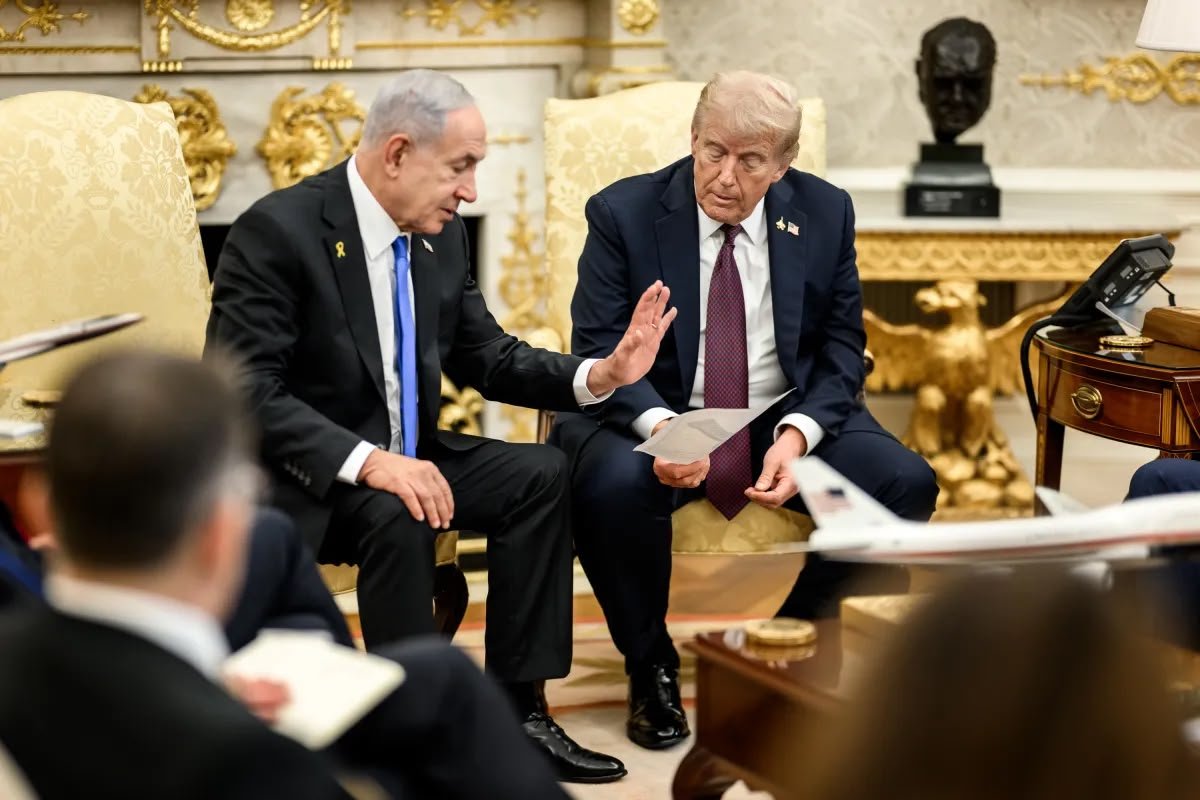
U.S. President Donald Trump has taken a U-turn on Sunday to endorse Israeli Prime Minister Benjamin Netanyahu just nine days before Israel’s October 27 national election, in a message addressed “To the Great People of Israel” that gave Netanyahu a public statement of support to take to voters.
It is an eye-opening endorsement that marks a documented reversal, in which for months Trump had avoided a clear commitment when asked whether Netanyahu should serve another term.
The most direct evidence is a Time magazine interview, pressed whether Israelis should give Netanyahu another term. Trump said: “Well, I can only say that I’m not involved in politics anymore, except that we’re popular—”
He did not endorse him then, and in other interviews and comments to reporters he has also pushed back saying he did not trust anybody in politics. He does not involve himself in politics anymore even though he has endorsed a lot of politicians all this time.
The reversal matters a lot because of the campaign value Netanyahu and his Likud party have placed on the relationship with Trump. That relationship has been treated by the ICC-wanted war crimes suspect and his party as a major electoral asset..
Trump’s earlier reluctance was therefore viewed as a setback.
With the October 27 vote nine days away — the first national election since the October 7, 2023 Hamas attack — a public, unequivocal endorsement from Trump restores an explicit expression of support from a U.S. president who is a prominent political ally.
Sunday’s statement addressed to the Great People of Israel. Its political weight is tied in part to Trump’s self-claimed popularity in Israel, which he put at “Like 99%!” in the Time interview.
The substance of the endorsement goes beyond personal praise, as the U.S. leader described Netanyahu as having “been a Great Warrior Prime Minister, and an even greater Partner for Peace in combatting the Islamic Republic of Iran”.
He put Netanyahu’s re-election as central to how he wants to handle Iran, warning that a different Israeli leader would leave Washington to confront Tehran itself, suggesting the U.S. burden would grow under someone else.
“If Israel has the wrong Leader, which would be anyone other than Bibi, America will have to do this work ourselves, and I am not inclined to do so,” he wrote.
In context, the fears Trump announced in the past are what analysts and Israeli political actors read as emphatic support, and pressure or leverage.
The timing of Sunday’s endorsement was also notable given the tensions that preceded it. Trump and Netanyahu had disagreed over strategy in Iran, Lebanon and Gaza, while Netanyahu faced domestic scrutiny over the October 7 security failures, the war and his ongoing legal cases.
The documented change is that Trump, who declined to endorse Netanyahu when directly asked in late September, issued a “Complete and Total Endorsement” with the October 27 election nine days away.